

Removal of drain
Authors: Monica Baunbaek, Nurse, and Stine Lucich, Nurse. Dept. of Plastic- and Breast Surgery, Roskilde, Zealand, Denmark
Patient presentation: Drain removal after axillary lymph node dissection surgery. The drains have now been in place for around 4 days and have a lower production of 30ml per day. Here we show how to remove the drain.


Before and after

Step 1: Equipment for removal
Be sure to prepare a cart with the correct tools to remove the drain
- Be sure to prepare a table with a sterile kit, some non woven swabs, film dressing with an absorbent pad (tegaderm) and some gauze swabs.

Step 2: Remove adhesive bandages
Remove surgical tape and any other adhesive bandages
- Carefully remove the adhesive bandages. make sure to not pull on the suture during the process.

Step 3: Open for vacuum
Be sure to open the chamber to remove vacuum in the drainage system, before removal
- Open the valve to remove the suction and there by the vacuum in the drainage system. This enables the removal of the drain to be more easy and less painful for the patient, with minimum risk of tissue damage.
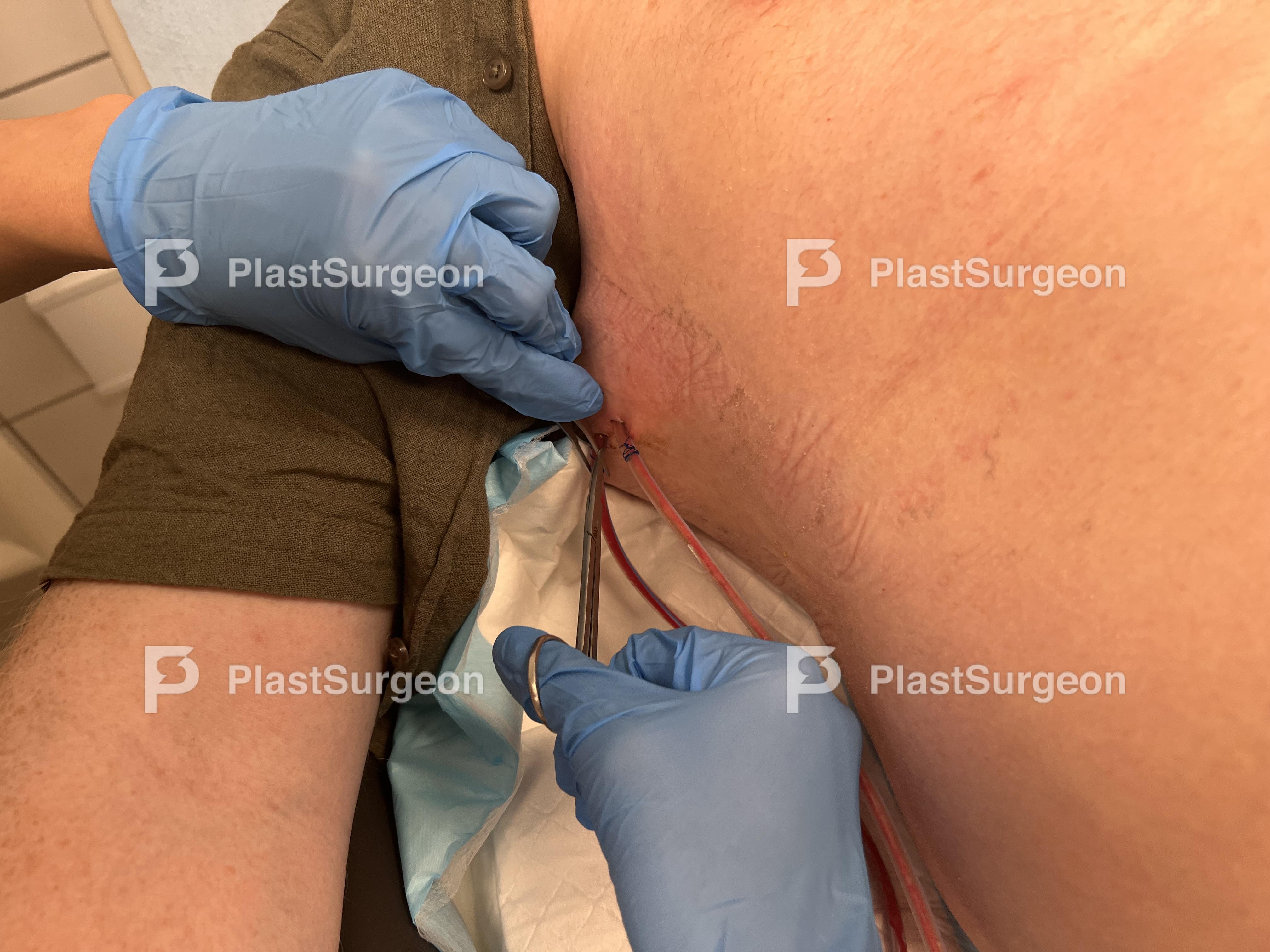
Step 4: Remove the sutures
Cut the stitch from the incision point, so as to remove the drain
- Remove the sutures,by fixate them first with a pair of sterile tweezers, and then as close to the skin as possible, as this facilitates removing them.
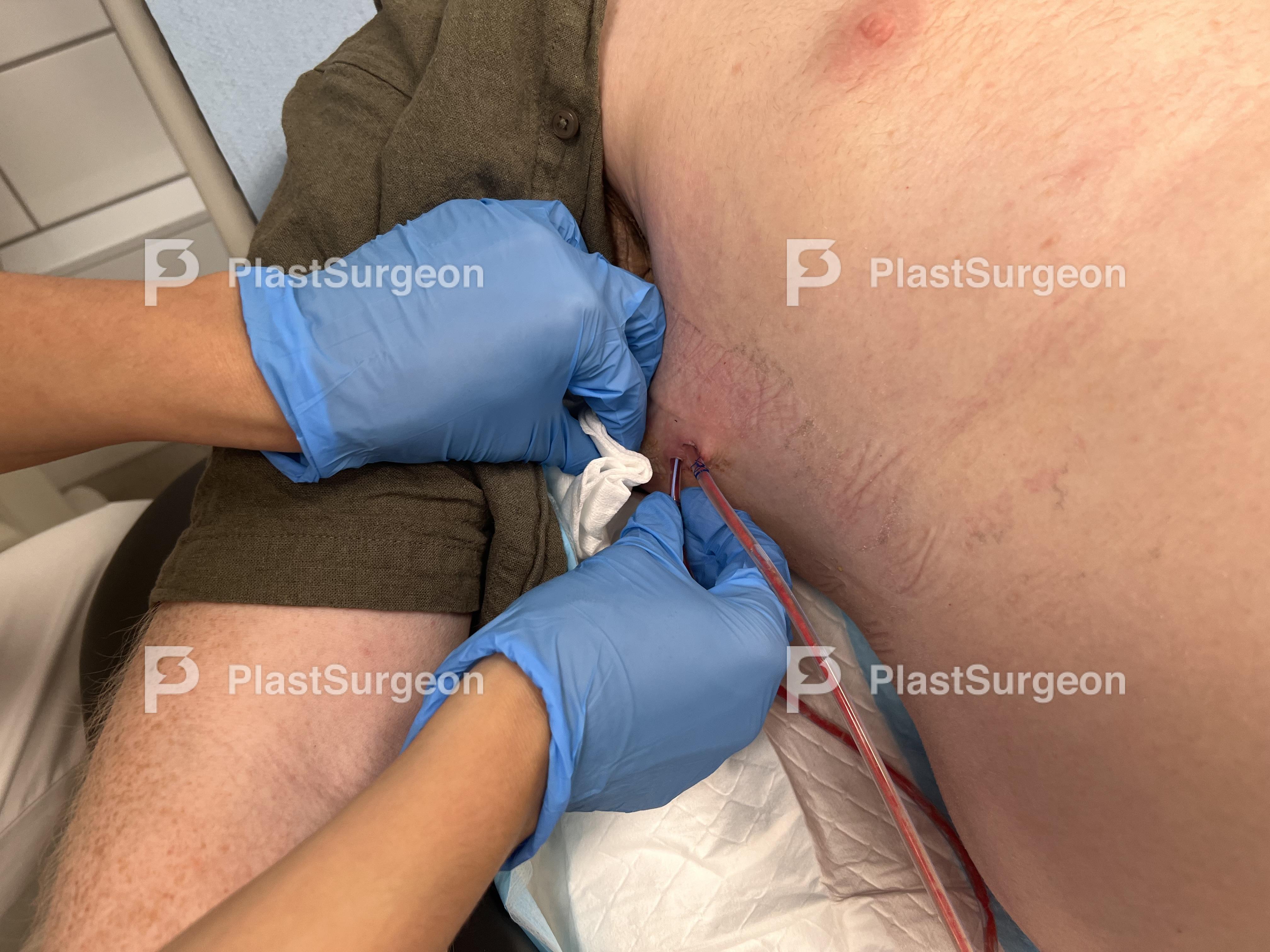
Step 5: Twist the catheter
Be sure to rotate catheter before removal, to loosen the drain
- Gently twist the catheter to make sure it isn’t suctioned to the underlaying tissue.
- Make sure the patient knows what you are doing when and why

Step 6: Remove drain
Now you can remove the drain, be sure to apply pressure on the incision spot
- Before removing the drain, ask the patient to take a deep breath, and as the patient exhales, pull gently and remove the drain in one long and careful movement.

Step 7: Clean the incision point
If necessary clean incision area for contamination
- Clean around the area where the sutures where removed, with a disinfection swab. Make sure to inform the patient, as this can sting.
- Place a sterile dressing plaster (for example mepore) over the suture points.
- Inform the patient to leave the dressing on for 24 hours.
- If there still is secretion from the removal point, then compress and use sterile gauze compressors to remove excess secretion, and change the dressing.
- Make sure to inform the patient of sign of infection and how to react if these signs appear.


